Photofacial Treatment in Delhi
Photo facial is a medical facial using the properties of IPL (intense pulse light) laser which has scientifically proven collagen boosting and facial revival properties. A number of skin conditions like brown spots, sun damaged skin, facial redness and open pores and skin texture improvement and fine lines can be treated with the help of photo facial. The duration of each session and the number of sessions required depends on the patient's skin condition. Results of photo facial are quite visible and at the end of the session your skin looks rejuvenated and brighter. With subsequent sessions, skin looks younger and more nourished. Dadu Medical Centre has established itself as one of the most resolute laser skin clinic in Delhi, Vasant Vihar (South Delhi), Rajouri Garden (West Delhi) providing an extensive range of laser treatment and Photofacial treatment services at an affordable cost in Delhi (Vasant Vihar & Rajouri Garden).
Isn’t it incredible how Photo facial can help you do away with so many problems at once? All kind of spots that occur on face and neck can be almost treating. We use Intense pulse light on melanin or haemoglobin to naturally stop the process of dark spots on your skin. So, contact one of the top Laser skin clinics in West Delhi (Rajouri Garden), Dadu Medical Centre for all kinds of premium dermatology services at info@drniveditadadu.in.
Photo facial therapy is an instantaneous treatment and doesn’t have any downtime. It doesn’t have any side effects. Within a few months of the treatment, complete results can be seen. With every sitting, the results will be better. The treatment at Dadu Medical Centre, Laser skin clinic in West Delhi, is very effective on all skin types but it is suggested that pregnant women should not to undergo this treatment.
IPL/Photofacial is a series of at least 5 treatments done at a suggested interval of 3-4 week. The wavelength, exposure, duration and energy level are chosen to specifically damage targeted skin problems without harming the surrounding tissue. The intense pulsed light energy is absorbed by damaged tissue. IPL/Photo facial intends to treat benign skin conditions to lighten, fade unwanted blood vessels, freckles, fine lines, scars, uneven skin colouring, tone and texture.
Photo facial treatment is an amazing dermatological facial which provides you an advantage to reduce:
1. Acne
2. Sun spots
3. Dark under eye circles
4. Freckles
5. Melasma
6. Rosacea
7. Oily skin (temporarily)
8. Open pores
9. Hyper-pigmentation
10. Broken Capillaries
11. Flushing
At the start of the session, Dr. Nivedita will assess your skin and discuss with you, your goals and what it will take to achieve your goals. The number of treatments required for optimal skin revival depends on your goal. After treatment, you may apply makeup immediately and resume work or regular activities. It is highly recommended that you follow a comprehensive skin care program suggested by Dr. Nivedita Dadu to optimize the cosmetic improvements you obtain with your photo facial.
Contraindications include pregnancy, retinoids epilepsy or those who have a history of seizures, chemo or radiation therapy, pacemaker, internal defibrillator, any internal metal device (surgical screws, pins or implants) in the area to be treated, HIV positive (a letter of clearance is required), multiple sclerosis (a letter of clearance with confirmation that the area to be treated is not numb), scleroderma, lupus, sarcoidosis, children under the age of 14, treatment over numbness of any body part, over moles or lesions of any kind, over tattoos, port wine stains, under the eyebrows, or any jaws. Skin sensitivity to IPL/ Photofacial treatments may increase by use of photosensitizing medications.
Before going out in sunlight, you must protect your skin with sun block and apply it at an interval of every few hours and use a hat or light clothing (whichever appropriate) for protection.
Benefits: For removal of skin blemishes (brown spots, spider veins, and skin pore size reduction). After series of treatment photofacial will make your skin brighter, clearer and smoother.
Treatment: Before treatment, a gel will be applied to your skin and you will be given goggles to wear. On the treatment area, a laser hand piece will be applied to the skin and with each pulses, you will feel a “hot rubber band sensation. During treatment you might see/feel flashes of bright lights with the goggle, which is normal.
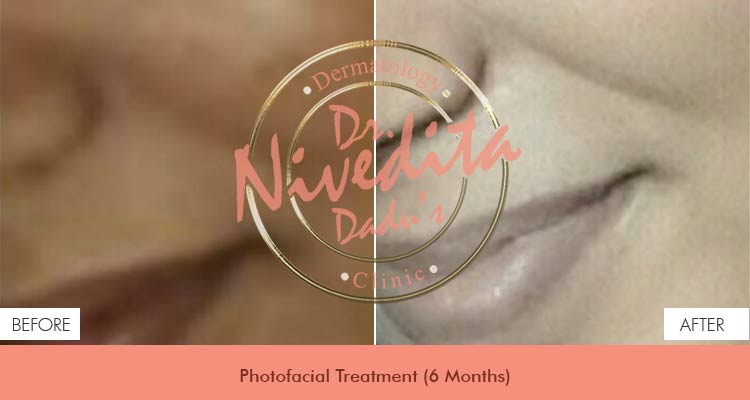 * Results may vary person to person.
IPL Photofacial Treatment in Delhi — A Simple Way to Brighten Skin, Fade Spots, and Reduce Redness Without Downtime
If you have been dealing with brown spots from sun exposure, redness that just will not settle, broken capillaries on the face, or an uneven skin tone that makes the skin look patchy and dull, you probably already know that regular skincare products handle these things very slowly if at all. These are concerns that sit below the surface of the skin in the pigment producing cells or in the blood vessels, and light based treatments reach them in a way that creams and serums simply cannot. IPL photofacial treatment in Delhi, also called Intense Pulsed Light therapy, is one of the most trusted and widely used light based skin treatments available today. It works on a range of skin concerns simultaneously, it is quick, and there is no real downtime involved. At Dadu Medical Centre, a leading skin clinic in Delhi with locations in Vasant Vihar and Rajouri Garden, Dr. Nivedita Dadu and her team of experienced doctors in Delhi have been helping patients achieve brighter, more even, and more youthful looking skin using photofacial therapy with results that build noticeably over a series of sessions.
The way a photofacial works is straightforward once you understand the basic idea. The IPL machine emits broad spectrum light pulses at specific wavelengths. This light is selectively absorbed by the pigment (melanin) in brown spots and by the haemoglobin in blood vessels and redness. When the light energy is absorbed by these targets, it damages them without harming the surrounding normal skin tissue. The body then naturally clears away the treated pigment and the damaged vessels, which results in the spots fading, redness reducing, and the overall skin tone becoming more even. At the same time, the heat generated by the light also stimulates collagen production in the deeper skin layers, which gradually improves skin texture, reduces the appearance of fine lines, and makes the skin look more plump and firm over time.
Before the session begins, Dr. Nivedita Dadu assesses the skin and discusses the patient's goals to understand exactly what is being targeted and what the realistic outcome will look like. A cool gel is then applied to the treatment area to help the light penetrate evenly and to keep the skin comfortable. The patient is given protective goggles since the light flashes are bright. The handpiece is placed on the skin and delivers pulses of light across the face or neck or any area being treated. With each pulse the patient feels a brief warm snapping sensation, sometimes described as a rubber band flick. Most people find it very tolerable. The session itself takes around 30 to 45 minutes for a full face and patients can put on makeup and go back to work or their normal schedule right after.
One of the things that makes photofacial treatment in Delhi particularly popular is how many different skin concerns it addresses in a single session. Sun spots, age spots, brown patches, freckles, melasma, redness from rosacea, broken capillaries, flushing, acne redness, uneven skin tone, open pores, and even mild fine lines all respond to this treatment. People who come in with two or three of these concerns at the same time find the photofacial particularly efficient because they are addressing multiple issues without needing multiple separate treatments.
A standard course of photofacial treatment is a series of five sessions spaced three to four weeks apart. The spacing is important because the skin needs time to complete its natural clearing process between sessions and collagen stimulation takes time to translate into visible improvement. Results tend to be progressive, with each session building on the previous one. After the first or second session patients usually notice that their skin looks more even and spots appear lighter. By the completion of the full course, the skin typically looks considerably clearer, brighter, and more uniform than when they started. After completing a course, many patients do maintenance sessions once or twice a year to keep the results looking their best.
Post treatment care is straightforward. Sunscreen is non negotiable and needs to be applied every day without exception during and after the course. Sun exposure should be minimised between sessions. Avoiding very hot environments like saunas and steam rooms for 24 to 48 hours after each session is advised. The doctors in Delhi at Dadu Medical Centre provide clear aftercare instructions after every session and also recommend a skincare routine that supports and extends the results of the treatment.
IPL Photofacial Treatment Cost in Delhi — Detailed Cost Breakdown
|
Treatment Type |
What It Targets |
Approximate Cost Range (INR) |
|
Single Photofacial Session (Full Face) |
General skin rejuvenation, pigmentation, redness, texture |
?4,000 to ?8,000 |
|
Course of 5 Photofacial Sessions |
Complete treatment cycle for optimal results on multiple concerns |
?18,000 to ?35,000 |
|
Photofacial for Pigmentation and Sun Spots |
Brown spots, age spots, sun damage, freckles |
?5,000 to ?9,000 per session |
|
Photofacial for Rosacea and Redness |
Facial redness, flushing, broken capillaries, spider veins |
?5,000 to ?9,000 per session |
|
Photofacial for Acne and Oily Skin |
Active acne, post acne redness, enlarged pores, oiliness |
?4,500 to ?8,000 per session |
|
Photofacial for Anti Ageing |
Fine lines, collagen stimulation, overall skin rejuvenation |
?5,000 to ?9,000 per session |
|
Neck or Chest Photofacial |
Sun damage and pigmentation on neck or decolletage area |
?3,500 to ?7,000 per session |
|
Annual Maintenance Session |
Single session to maintain results after completing full course |
?4,000 to ?8,000 |
These are indicative price ranges. The number of sessions needed varies based on the severity of the concern and the patient's skin type. Final cost confirmed during consultation at Dadu Medical Centre, clinic in Delhi.
Skin Concerns Treated by IPL Photofacial and Expected Outcome
|
Skin Concern |
How Photofacial Helps |
Sessions Typically Needed |
Expected Outcome |
|
Sun spots and age spots |
IPL targets melanin in spots, body naturally clears damaged pigment |
3 to 5 sessions |
Visible fading of spots, more even skin tone |
|
Freckles |
Light absorbed by melanin breaks down freckling pigment |
3 to 5 sessions |
Significant reduction in freckles |
|
Melasma |
IPL helps lighten some types of melasma when settings are carefully adjusted |
4 to 6 sessions with caution |
Gradual lightening, may need combination approach |
|
Rosacea and facial redness |
IPL targets haemoglobin in blood vessels causing redness |
4 to 5 sessions |
Reduced visible redness and flushing |
|
Broken capillaries and spider veins |
Light seals and collapses small visible facial vessels |
3 to 4 sessions |
Visible reduction in broken capillaries |
|
Acne and post acne redness |
Kills acne bacteria, reduces inflammation and post acne marks |
4 to 5 sessions |
Fewer active breakouts, reduced redness |
|
Open pores and texture |
Collagen stimulation tightens skin and reduces pore appearance |
4 to 5 sessions |
Smoother texture, slightly smaller looking pores |
|
Fine lines and early ageing |
Heat stimulates collagen which firms and plumps the skin |
5 sessions for collagen effect |
Gradual improvement in fine lines and skin firmness |
|
Dull and uneven skin tone |
Broad spectrum light clears pigment irregularities |
3 to 5 sessions |
Brighter, more uniform and radiant complexion |
IPL Photofacial vs Other Skin Brightening Treatments at the Clinic in Delhi
|
Feature |
IPL Photofacial |
Laser Toning |
Chemical Peel |
HydraFacial |
|
Technology |
Broad spectrum pulsed light |
Specific laser wavelength |
Chemical exfoliation |
Vacuum suction with serums |
|
Targets Pigmentation |
Yes, very effectively |
Yes |
Yes, surface level |
Partially |
|
Targets Redness and Vessels |
Yes |
No |
No |
No |
|
Stimulates Collagen |
Yes |
Yes |
Mildly |
No |
|
Suitable for Rosacea |
Yes |
With caution |
Not ideal |
Yes |
|
Downtime |
None |
None |
1 to 3 days mild sensitivity |
None |
|
Pain |
Very mild, rubber band sensation |
Mild warmth |
Mild tingling |
None |
|
Sessions Needed |
Series of 5 recommended |
Series of 4 to 6 |
Series of 3 to 6 |
Single or monthly |
|
Can Apply Makeup After |
Yes, same day |
Yes, same day |
Not immediately |
Yes, same day |
|
Best For |
Multiple concerns together, pigmentation, redness, collagen |
Pigmentation, toning, skin quality |
Texture, acne, pigmentation |
Hydration, glow, congestion |
|
Available at Dadu Medical Centre |
Yes |
Yes |
Yes |
Yes |
Frequently Asked Questions
Q. Is photofacial treatment painful?
A. Most patients describe it as a warm snapping sensation with each pulse. It is well tolerated by most people and the session is generally considered comfortable with no need for numbing cream.
Q. Is there any downtime after a photofacial session?
A. There is no significant downtime. The skin may appear slightly pink for a few hours after the session and any existing brown spots may temporarily look darker before they flake off over the following days. Makeup can be applied immediately.
Q. How many sessions do I need for results?
A. A standard photofacial course consists of 5 sessions spaced 3 to 4 weeks apart. Most patients start noticing improvement from the second or third session and see the full benefit by the end of the course.
Q. Is IPL photofacial safe for Indian skin types?
A. Yes, but the settings need to be carefully adjusted for darker Indian skin tones to avoid unwanted pigmentation changes. The doctors in Delhi at Dadu Medical Centre are experienced with South Asian skin and customise every session accordingly.
Q. Can I wear sunscreen after a photofacial session?
A. Yes and you absolutely should. Daily sunscreen is essential during and after the treatment course to protect the skin and maintain the results. The clinic in Delhi will recommend a suitable SPF for your skin.
Q. Will my brown spots disappear completely after photofacial?
A. Most patients see significant fading and in many cases spots become very difficult to see after a full course. Complete elimination depends on the type of pigmentation, its depth, and consistency of sun protection afterward.
Q. Who should not get a photofacial treatment?
A. Pregnant women, people using photosensitising medications, those with a history of seizures or epilepsy, people with certain implanted devices, and those who are very tanned should not get this treatment. Dr. Nivedita Dadu will assess suitability during consultation.
Q. Can photofacial treat rosacea?
A. Yes. IPL is one of the most effective treatments for rosacea related redness and flushing. It targets the small blood vessels responsible for persistent facial redness and reduces their visibility over a course of sessions.
Q. How long do photofacial results last?
A. With proper sun protection and a suitable skincare routine, results from a full photofacial course can last a year or more. Annual maintenance sessions help keep the skin looking consistently brighter and more even.
Q. Why choose Dadu Medical Centre for photofacial treatment in Delhi?
A. Dr. Nivedita Dadu and the experienced team at the clinic in Delhi combine careful skin assessment, the right IPL settings for each skin type, and a personalised aftercare plan to ensure every patient gets safe, visible, and lasting results from their photofacial sessions.