Hair Loss Treatment for Men in Delhi
Male hair loss treatment in Delhi is available with non-surgical procedures. hair loss treatment for men in delhi has appeared as the most concerning cosmetic problem in the recent years, especially the last two decade. The changed environment due to pollution, food choices, sun exposure and many other reasons like stress, tension and work pressure has increased the risk of this problem. All you need to do is contact a leading Hair Fall Specialist in Delhi.
What causes hair loss in men?
There are many reasons that cause hair loss in men. Some of them are highlighted below:
-
Male Hormone: Males have male hormones which is responsible for hair thinning and baldness in males.
- Stress: Noted by many experts as one of the most prevalent reasons for hair loss in men today, stress has a lot to do to your hair. It has been observed that men who lead their life under pressure – work or family, lose their hair early .
- Protein Deprivation: Yes, your diet has an important role to play in the terms of hair loss. Men, who do not have a proper diet that contains adequate amounts of protein, often have hair loss problems.
- Outdoor Effect: Excessive sun exposure, pollution, dirt and dust have also their respective roles to play when it comes to hair loss in men. That is why in the metro cities, men have more problem of hair loss than men in rural areas.
- Genetic Causes: It is noted that genes have also a role in hair loss in men. Men who have family members with baldness often get it .
Signs of hair loss in men:
Dr. Nivedita Dadu, the Best Doctor for Hair Fall in Delhi, can help you better. Different from of hair fall show different signs which cannot miss the eye of an expert dermatologist. :
- Androgenetic Alopecia (patterned baldness): There is a recession of hair line & decreased density at crown area.
- Alopecia areata: Coin sized patchy hair loss in otherwise healthy people.
- Scarring alopecia: Patient may complain of itching and burning in scalp.
While some factors are really out of your hand (though fixed easily by treatment) you can try following some tips to prevent hair loss in men.
- Proper diet: Balance your diet properly. Ensure that you have proper intakes of vitamins and proteins in your food.
- Use of products: Choose your hair products wisely and use them moderately .
- Hair protection: Protect your hair from dirt, dust and pollution.
- Avoid hair oil application.
- Daily shampooing.
Treatment –
Depending upon your history and scalp examination, Dr. Nivedita will discuss with you the various treatment option available.
These include-
- Multivitamins for hair fall with oral medication for targeted therapies like anti androgens.
- Hair growth peptides.
- Non surgical options like mesotherapy, HGP, hair growth stimulation laser, micro needling, scalp threads.
- Surgical procedures like hair transplant – F.U.E.
Dadu Medical Centre located in Delhi, Vasant Vihar (South Delhi), Rajouri Garden (West Delhi) is one of the best Clinic for Hair Loss Treatment in Delhi for Man. Please feel free to visit for more details about the treatment.
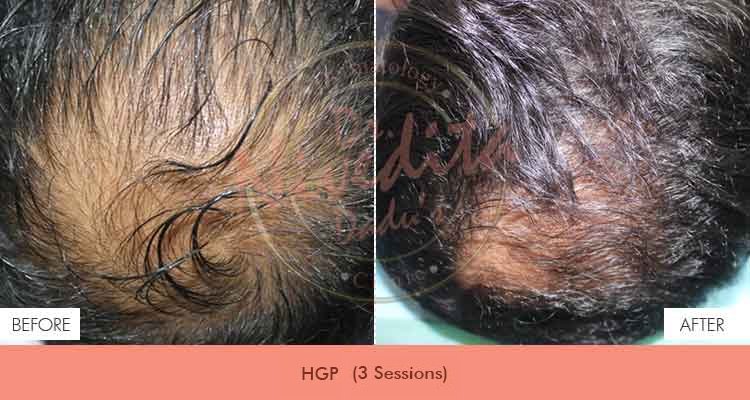 * Results may vary person to person.
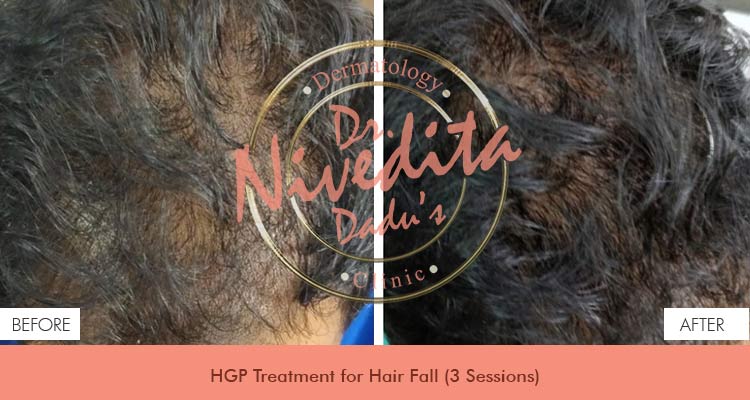 * Results may vary person to person.
Hair Loss Treatment for Men in Delhi – Causes, Signs, and What Actually Helps
Hair loss in men is one of those things that starts quietly and then one day becomes impossible to ignore. The hairline that has crept back a little, the thinning at the crown that was not there a few years ago, the extra hair on the pillow every morning. For a lot of men it begins in their twenties or thirties and the frustrating part is that most of them do not know why it is happening or what they can actually do about it.
The truth is that male hair loss has multiple causes and understanding which one is driving your specific situation is the first step toward fixing it. The most common cause is male hormones. A hormone called DHT, which is derived from testosterone, gradually shrinks hair follicles over time making them produce thinner and shorter strands until they eventually stop producing hair altogether. This type of hair loss, called androgenetic alopecia or pattern baldness, shows up as a receding hairline and thinning at the crown and is largely genetic. If the men in your family went bald early there is a reasonable chance you will too unless it is treated proactively.
Stress is another major driver that tends to get underestimated. Men who carry heavy work pressure or personal stress over long periods often notice a significant increase in hair shedding. The body essentially diverts resources away from non-essential functions like hair growth when it is under chronic stress, which is why the shedding often starts a few months after a particularly difficult period rather than immediately during it.
Diet plays a bigger role than most men realise as well. Protein is the building block of hair and men who are not getting enough of it through their daily diet are at a much higher risk of hair thinning. Nutritional deficiencies in iron, zinc, and certain vitamins compound the problem further. On top of this, living in a metro city means daily exposure to pollution, dust, and UV rays, all of which gradually damage the scalp and the hair shaft, contributing to the kind of hair loss that rural populations tend to experience far less of.
Apart from pattern baldness there are other types of hair loss that men experience. Alopecia areata shows up as coin-sized patchy bald spots and is related to an immune response rather than hormones. Scarring alopecia is a less common type where itching or burning on the scalp accompanies the hair loss. Each of these requires a different approach which is why getting a proper diagnosis from an experienced dermatologist matters so much before starting any treatment.
Hair loss treatment in Delhi has advanced considerably and there are now effective non-surgical options that work well for most men. Prescription topical treatments, oral medications, PRP therapy, GFC, mesotherapy, and low level laser therapy are all widely available at good hair clinics in Delhi and have shown strong results when used as part of a structured plan. The key is starting early because the more follicles that are still active the better the outcome. Doctors in Delhi who specialise in hair loss will run a proper scalp assessment, identify the type and cause of your hair loss, and build a treatment plan that is specific to your situation rather than generic.
Dadu Medical Centre offers comprehensive hair loss consultations for men with experienced dermatologists who diagnose the root cause and design personalized, medically backed treatment plans that deliver real and lasting results.
FAQs
1. At what age does male pattern baldness usually start showing?
Ans. It can begin as early as the mid-twenties though it becomes more noticeable for most men in their thirties and forties.
2. Can stress-related hair loss in men be reversed?
Ans. Yes, once the underlying stress is addressed and the right treatment is started most men see significant regrowth over several months.
3. Is hair loss treatment in Delhi effective for advanced baldness?
Ans. Treatment works best in early to moderate stages when follicles are still active, which is why starting sooner gives better outcomes.
4. What is the difference between androgenetic alopecia and alopecia areata?
Ans. Androgenetic alopecia is pattern baldness driven by hormones while alopecia areata causes patchy hair loss due to an immune response.
5. Do diet changes alone help with male hair loss?
Ans. Improving diet can support hair health and reduce shedding but significant hair loss usually needs medical treatment alongside nutritional correction.
6. How do doctors in Delhi diagnose the cause of hair loss in men?
Ans. Through a detailed scalp examination, medical history review, and blood tests to check for hormonal, nutritional, or inflammatory triggers.