
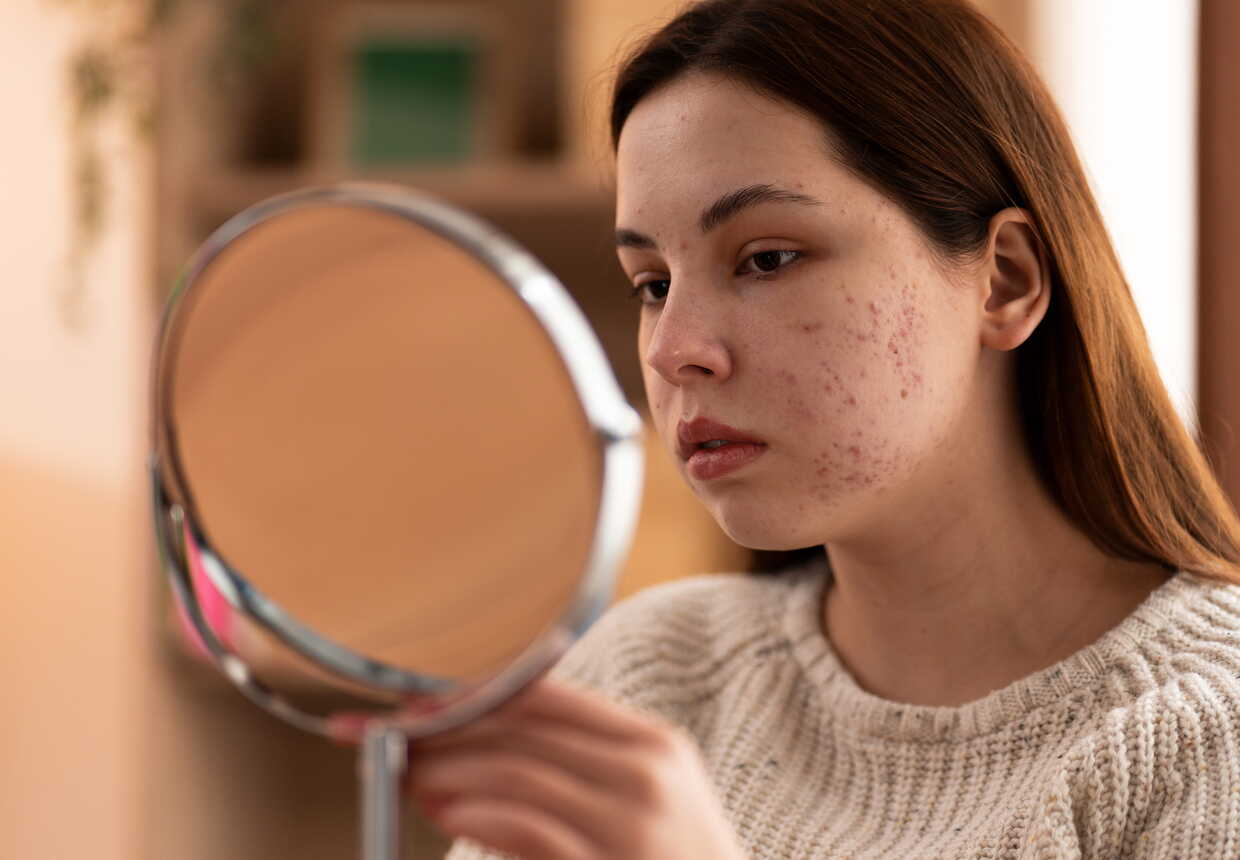
Almost every woman has experienced it at some point. The skin behaves perfectly well for most of the month and then, about a week before the period starts, pimples begin appearing on the chin, jaw, or around the mouth. These are not random breakouts. This is hormonal acne during menstrual cycle treatment in Delhi, and it follows a very predictable pattern that is directly tied to the hormonal changes that happen across the four phases of the menstrual cycle. Understanding why these breakouts happen, why they tend to appear in the same locations every month, and what can genuinely be done about them both at home and at a skin clinic in Delhi is what this guide covers. At Dadu Medical Centre, one of the trusted acne treatment clinics in Delhi, Dr. Nivedita Dadu regularly treats women dealing with this exact pattern of cyclical hormonal breakouts, and the approach is always grounded in understanding the hormonal root of the problem rather than just treating the spots as they appear. The clinic is located at Vasant Vihar in South Delhi and Rajouri Garden in West Delhi, and consultations with the acne doctors in Delhi here address both the immediate breakout and the long-term cycle regulation that prevents it from recurring month after month.
To understand why acne flares before and during periods, you need to follow what happens to hormones across the menstrual cycle. The cycle has four phases: menstrual, follicular, ovulatory, and luteal. Estrogen rises through the follicular and ovulatory phases and during this time the skin often looks its best clear, firm, and bright. Estrogen has an anti-inflammatory effect and it also supports collagen production and helps the skin's barrier function stay intact. After ovulation, the luteal phase begins and progesterone rises sharply. Progesterone stimulates the sebaceous glands, the oil-producing structures attached to hair follicles to produce more sebum. More sebum means more material for the follicle to potentially get blocked with. In the days just before the period starts, both estrogen and progesterone drop, but testosterone remains relatively more prominent. Testosterone directly stimulates sebaceous gland activity and this hormonal shift the drop in the estrogen that was previously providing some regulation, combined with the relative elevation of androgens is what triggers the peak of oil production and pore blockage that leads to pre-menstrual acne. The breakouts tend to appear along the chin, jaw, lower cheeks, and around the mouth because this area of the face has a higher density of sebaceous glands and is the zone most responsive to androgenic stimulation. Menstrual acne pimples are often cystic or nodular meaning they sit deeper in the skin, are painful to touch, and do not always come to a head like surface-level whiteheads do. This depth makes them harder to treat with surface products alone and is one reason they leave more significant marks and sometimes small scars.
For women whose hormonal acne is moderate to severe, the cyclical nature of the breakouts is compounded by the fact that each month a new round of deep, inflamed pimples appears before the previous ones have fully healed or faded. Over time this produces a situation where the lower face has a combination of active pimples, healing marks, and post-inflammatory dark marks all present at the same time. The treatment for this needs to work on multiple levels managing the immediate active breakout, reducing the likelihood of the next cycle's breakout, and addressing the dark marks and potential scarring left behind by previous ones. At the acne treatment clinic in Delhi at Dadu Medical Centre, the approach typically starts with a detailed consultation where Dr. Nivedita Dadu reviews the patient's cycle pattern, their contraceptive or hormonal medication status, their diet, stress levels, and any underlying conditions like PCOS that may be amplifying the hormonal fluctuation. Blood investigations may be recommended including tests for free and total testosterone, DHEA-S, LH, FSH, prolactin, and thyroid function to identify whether there is an underlying hormonal imbalance that needs to be addressed medically beyond just the skin. For patients with PCOS or elevated androgens, working with an endocrinologist or gynaecologist alongside the dermatologist is often the right approach to get the most lasting outcome.
In terms of what can be done from a skincare standpoint, some daily habits make a meaningful difference to the severity of hormonal breakouts. Keeping the skin well-cleansed without over-stripping it is important using a gentle, non-comedogenic salicylic acid cleanser helps keep the pores cleared without causing the dryness that can trigger compensatory oil production. A lightweight, oil-free moisturiser is important even for oily skin. Skipping moisturiser does not reduce oiliness, it just makes the skin produce more oil to compensate. Niacinamide is one of the most useful topical ingredients for hormonal acne because it reduces sebum production, calms inflammation, and helps fade post-acne marks simultaneously. Topical retinoids used consistently even on nights when there are no active pimples accelerate cell turnover, keep the follicles clear, and reduce the overall tendency for the skin to block up with the surge in oil that comes pre-menstrually. In the two to three days before the period is expected, some women find it helpful to spot-apply a benzoyl peroxide treatment or a salicylic acid spot treatment to the lower face and chin proactively, before the pimples actually form, to reduce how many actually break through. Diet also plays a role: dairy products and high glycaemic foods like refined sugar, white rice, and processed carbohydrates have both been linked in multiple studies to increased acne severity, and reducing them consistently throughout the month, not just around the period, produces measurable improvements for many women. Managing stress through the luteal phase is equally important because cortisol, the stress hormone, has a direct amplifying effect on sebum production and inflammation, both of which make hormonal acne worse.
For in-clinic treatment of period-related acne in Delhi, the options at Dadu Medical Centre cover everything from managing the active acne to treating the marks and preventing future cycles of damage. Chemical peels, particularly salicylic acid peels are done at intervals through the month to keep the follicles clear and reduce the bacterial load on the skin. Acne Zap Laser sessions can be timed to reduce the bacterial and oil activity in the skin before the expected flare. For the dark marks and early scars, treatments like DivaGenesis, Erbium Fibre Laser, MNRF, and chemical peels are used once the active acne is controlled. For patients whose hormonal acne is driven by PCOS, oral medications including spironolactone or combined oral contraceptive pills may be prescribed by the dermatologist or the patient's gynaecologist to regulate the androgenic stimulation of the sebaceous glands, which is often the most effective long-term intervention for genuinely hormonal acne.
Hormonal Acne Treatment Options at Dadu Medical Centre, Delhi
|
Treatment |
How It Helps for Hormonal Acne |
Session Frequency |
Approx. Cost |
|
Salicylic Acid Chemical Peel |
Clears blocked follicles, reduces oil and bacteria |
Every 2 – 4 weeks |
Rs. 1,500 – Rs. 5,000 |
|
Acne Zap Laser |
Kills acne bacteria, reduces sebaceous gland activity |
Every 2 – 3 weeks |
Rs. 3,000 – Rs. 6,000 |
|
Acne Erase (MDA + High Frequency) |
Deep pore clearing and bacterial elimination |
Every 1 – 2 weeks |
Rs. 2,000 – Rs. 4,500 |
|
DivaGenesis |
Treats post-acne pigmentation from hormonal breakouts |
Every 2 – 4 weeks |
Rs. 3,000 – Rs. 8,000 |
|
Erbium Fibre Laser / MNRF |
Improves acne scars after hormonal acne clears |
Every 3 – 4 weeks |
Rs. 4,000 – Rs. 18,000 |
|
Oral / Topical Prescription |
Retinoids, antibiotics, spironolactone, OCP |
Daily as prescribed |
Rs. 300 – Rs. 2,000 per month |
Treatment plan is customised after consultation. Final cost confirmed at the clinic.
The Menstrual Cycle and Skin Changes by Phase
|
Cycle Phase |
Days |
Hormone Status |
What Happens to Skin |
|
Menstrual Phase |
Day 1 – 5 |
Estrogen and progesterone at lowest |
Skin often sensitive, inflamed pimples may peak |
|
Follicular Phase |
Day 6 – 13 |
Estrogen rising steadily |
Skin begins clearing, fewer breakouts, better texture |
|
Ovulatory Phase |
Day 14 |
Estrogen peaks |
Skin often at its best clearest, most even and bright |
|
Luteal Phase (Early) |
Day 15 – 21 |
Progesterone rises, sebum increases |
Oiliness begins, pores appear larger, early congestion |
|
Luteal Phase (Late / Pre-Menstrual) |
Day 22 – 28 |
Estrogen and progesterone drop, androgens relatively elevated |
Oil peaks, follicles block, pre-menstrual acne appears |
Identifying which phase your skin is in helps time skincare adjustments and in-clinic treatments for best results.
Dietary and Lifestyle Changes That Reduce Hormonal Acne
|
Factor |
Effect on Hormonal Acne |
Recommended Change |
|
High Glycaemic Foods (Sugar, White Rice, Bread) |
Spike insulin and IGF-1, amplifying sebum production |
Replace with whole grains, reduce refined sugar intake |
|
Dairy Products |
Contains hormones that stimulate IGF-1 and sebaceous glands |
Reduce especially skim milk consider non-dairy alternatives |
|
Stress (High Cortisol) |
Amplifies sebum production and inflammation directly |
Mindfulness, adequate sleep, exercise during luteal phase |
|
Dehydration |
Compromises skin barrier, increases sensitivity and redness |
8 – 10 glasses of water daily, electrolyte balance |
|
Omega-3 Deficiency |
Low omega-3 increases inflammatory response in the skin |
Add fatty fish, walnuts, flaxseed to daily diet |
|
Poor Sleep |
Disrupts hormone regulation overnight, worsens cortisol |
7 – 9 hours consistently, especially in luteal phase |
|
Touching or Picking Pimples |
Introduces bacteria, worsens inflammation, causes scarring |
Clean hands only, use spot treatment instead of squeezing |
Dietary changes need 6 – 8 weeks of consistency before visible improvement in breakout frequency is noticed.
Frequently Asked Questions (FAQs)
Q. Why do I always get pimples before my period starts?
Ans. The drop in estrogen and rise in androgens in the pre-menstrual phase stimulates oil production and pore blockage, which causes the predictable cyclical breakouts most women experience.
Q. Where does period acne usually appear on the face?
Ans. Hormonal breakouts most commonly appear on the chin, jaw, lower cheeks, and around the mouth areas with a higher concentration of androgen-sensitive sebaceous glands.
Q. Is there an effective treatment for period acne in Delhi?
Ans. Yes, Dadu Medical Centre offers chemical peels, Acne Zap Laser, and prescribed topical and oral medications that manage active breakouts and prevent their recurrence month after month.
Q. Does PCOS make period acne worse?
Ans. Yes, PCOS causes elevated androgen levels which significantly amplify sebaceous gland activity, making hormonal acne more severe and persistent than in women without PCOS.
Q. Can changing my diet reduce period breakouts?
Ans. Yes, cutting back on high glycaemic foods and dairy, increasing omega-3 intake, and managing stress levels during the luteal phase measurably reduces breakout severity for most women.
Q. What is the cost of hormonal acne treatment in Delhi?
Ans. In-clinic treatment costs range from approximately Rs. 1,500 to Rs. 18,000 per session depending on the procedure. Prescribed medications are additional and vary based on the plan.
Q. Should I see a dermatologist or a gynaecologist for period acne?
Ans. Both can be relevant; the dermatologist at Dadu Medical Centre manages the skin directly, and for underlying hormonal causes like PCOS, collaboration with a gynaecologist gives the best long-term outcome.
Q. Are anti-acne creams and face washes enough to manage period breakouts?
Ans. For mild cyclical acne, a consistent topical routine helps. For moderate to severe hormonal breakouts, prescription treatment and in-clinic sessions are usually needed for adequate control.
Q. Will period acne leave permanent scars?
Ans. Deep hormonal pimples can leave post-inflammatory marks and mild scars if not treated properly. Early intervention and avoiding picking significantly reduces the risk of permanent scarring.
Q. Which clinic in Delhi should I visit for period acne treatment?
Ans. Dadu Medical Centre in Vasant Vihar and Rajouri Garden, led by Dr. Nivedita Dadu, is a trusted acne treatment clinic in Delhi offering specialised care for hormonal and period-related acne.