
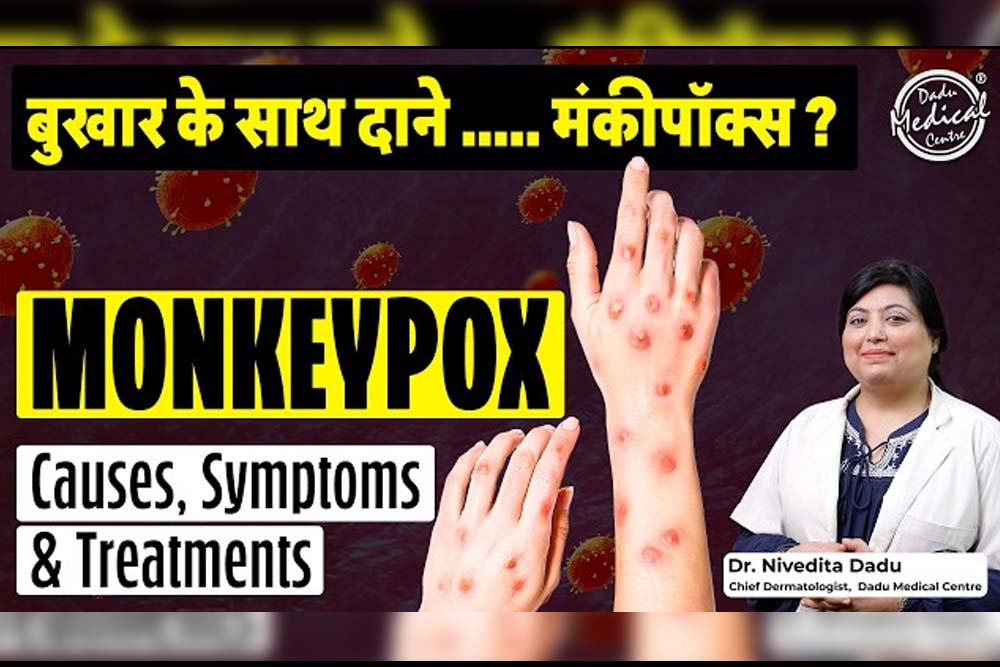
Monkeypox has been making headlines for spreading rapidly in places it historically wasn't found, and that alone raises a lot of questions: how worried should you actually be, how does it spread, and what can you do to protect yourself? Here's a clear, practical breakdown of what this infection actually involves.
What Is Monkeypox, Exactly?
Monkeypox is caused by a virus from the orthopoxvirus family, aptly named the monkeypox virus. Despite the name, though, it's worth clearing up a common misconception right away this infection isn't limited to monkeys. The virus has always existed in certain animal populations, particularly rats, squirrels, and pigs, which act as its natural reservoir. These animals carry the virus without necessarily causing widespread outbreaks, and certain countries mostly in Africa, where dense forest regions support large wild animal populations are considered endemic to this virus, meaning low-level infection has always circulated there among both animals and humans.
So Why Did It Suddenly Spread Elsewhere?
The first documented human case actually goes back to 1970, detected in a laboratory setting where the virus was traced to a monkey which is exactly how the name "monkeypox" stuck, even though the virus can jump from various animal species, not just monkeys.
The recent spread beyond its usual endemic regions is believed to be linked to the import of exotic animals from African countries into other continents, including parts of Europe, the UK, and the US. If some of these imported animals were already carrying the virus, that created a pathway for the infection to reach new populations. From there, the virus spread further through human-to-human contact, including within certain specific social groups, before continuing to circulate more broadly.
How Does Monkeypox Actually Spread?
There are several distinct ways this infection passes from one person to another, and understanding these is genuinely the most practical way to protect yourself.
- Animal bites or scratches: If an infected animal bites or scratches a person, the virus can transmit directly.
- Respiratory droplets: Since this spreads through the respiratory tract too, sneezing or coughing from an infected person can transmit the virus to others nearby.
- Direct contact with lesions: The infection causes visible sores or blisters on the skin, and touching these directly on an infected person can spread the virus.
- Fomite transmission: This means touching contaminated surfaces door handles, towels, or shared objects that an infected person has touched, then transferring the virus to yourself.
- Sexual transmission: The virus can also spread through sexual contact.
|
Transmission Route |
How It Happens |
|
Animal bite/scratch |
Direct contact with an infected animal |
|
Respiratory droplets |
Coughing, sneezing near an infected person |
|
Skin lesion contact |
Touching sores or blisters directly |
|
Fomite transmission |
Touching contaminated surfaces or shared items |
|
Sexual contact |
Direct transmission during intimate contact |
What Happens After Infection: Symptoms and Timeline
Like most infections, monkeypox has an incubation period the gap between exposure and symptoms actually appearing. This ranges from 4 to 20 days, though it's typically estimated around 10 to 12 days on average.
Early symptoms generally include fever, fatigue, body aches, headache, and sometimes respiratory difficulty. One symptom that helps distinguish monkeypox from chickenpox is lymphadenopathy swelling of the lymph nodes, including submental, submandibular, and inguinal nodes. Chickenpox and smallpox typically don't cause this lymph node enlargement, which makes it a useful differentiating clue.
The rash stage typically begins two to three days after fever onset. It starts as small bumps, which then fill with fluid, usually beginning on the face before gradually spreading to the rest of the body, including the abdomen and limbs. In some cases, these fluid-filled blisters can develop pus. Over the following two to three weeks, they gradually dry out, crust over, and eventually fall off on their own.
|
Symptom Stage |
Timeline |
What to Expect |
|
Incubation period |
4–20 days (avg. 10–12 days) |
No visible symptoms yet |
|
Early symptoms |
Onset of fever |
Fatigue, body aches, headache, lymph node swelling |
|
Rash appears |
2–3 days after fever |
Fluid-filled blisters, starting on face, spreading outward |
|
Healing phase |
2–3 weeks |
Crusting, scabbing, lesions fall off |
It's genuinely important to stay away from an infected person until their lesions have completely healed and fallen off, since the infection remains transmissible throughout that entire period.
Treatment: What Actually Helps
Treatment largely centers around supportive care rest, adequate hydration, and managing symptoms like fatigue and body aches as they arise, under a doctor's guidance. Certain antiviral medications, such as cidofovir, have shown effectiveness, but this comes with an important caveat: cidofovir is typically administered in high doses and carries nephrotoxic risk, meaning it can affect kidney function. This is exactly why self-medicating isn't an option here any treatment decision needs to go through a qualified doctor who can weigh these risks properly.
Vaccination: Who Needs It and What's Available
This is arguably the most important part of prevention. Vaccination is particularly critical for anyone who's had contact with an infected person getting vaccinated within four to five days of exposure significantly reduces both the chances of infection and its severity if it does occur. Healthcare professionals treating infected patients, along with veterinary doctors treating infected animals, are also considered priority groups for vaccination.
In terms of what's available, the older smallpox vaccine offers some protection, given how closely related these viruses are, though its effectiveness against monkeypox specifically sits around 85%. A newer vaccine, introduced in 2015, offers improved effectiveness against both smallpox and monkeypox. This newer vaccine requires two doses, with the second dose administered four weeks after the first.
|
Vaccine |
Effectiveness |
Dosing |
|
Older smallpox vaccine |
~85% effective against monkeypox |
Single dose |
|
Newer vaccine (introduced 2015) |
Higher effectiveness against both smallpox and monkeypox |
Two doses, 4 weeks apart |
Staying Informed and Staying Safe
Monkeypox isn't a reason for panic, but it does deserve genuine awareness, particularly around how it spreads and who should prioritise vaccination. Recognising early symptoms, understanding transmission routes, and knowing when to seek medical care are the most practical tools available to protect yourself and those around you.
Frequently Asked Questions
1. Can monkeypox only spread from monkeys? No, despite the name, the virus can spread from various animals including rats, squirrels, and pigs. Human-to-human transmission is also possible through multiple routes.
2. How long does it take for symptoms to appear after exposure? The incubation period ranges from 4 to 20 days, typically averaging around 10 to 12 days. Symptoms usually begin with fever before the rash develops.
3. How is monkeypox different from chickenpox? Monkeypox causes lymph node swelling, which chickenpox and smallpox typically don't cause. This is a key differentiating symptom for diagnosis.
4. Is monkeypox treatable at home? Mild cases can be managed with rest, hydration, and symptom relief under medical guidance. Antiviral medication like cidofovir should only be used under a doctor's supervision.
5. Who should get vaccinated against monkeypox? Close contacts of infected individuals, healthcare workers treating patients, and veterinarians treating infected animals are priority groups. Vaccination within 4-5 days of exposure significantly reduces infection risk.
6. How long is a person contagious with monkeypox? A person remains contagious until all skin lesions have fully healed and fallen off. This typically takes around two to three weeks from rash onset.
7. Can monkeypox spread through touching contaminated objects? Yes, this is called fomite transmission, where touching surfaces like door handles or towels used by an infected person can spread the virus.