
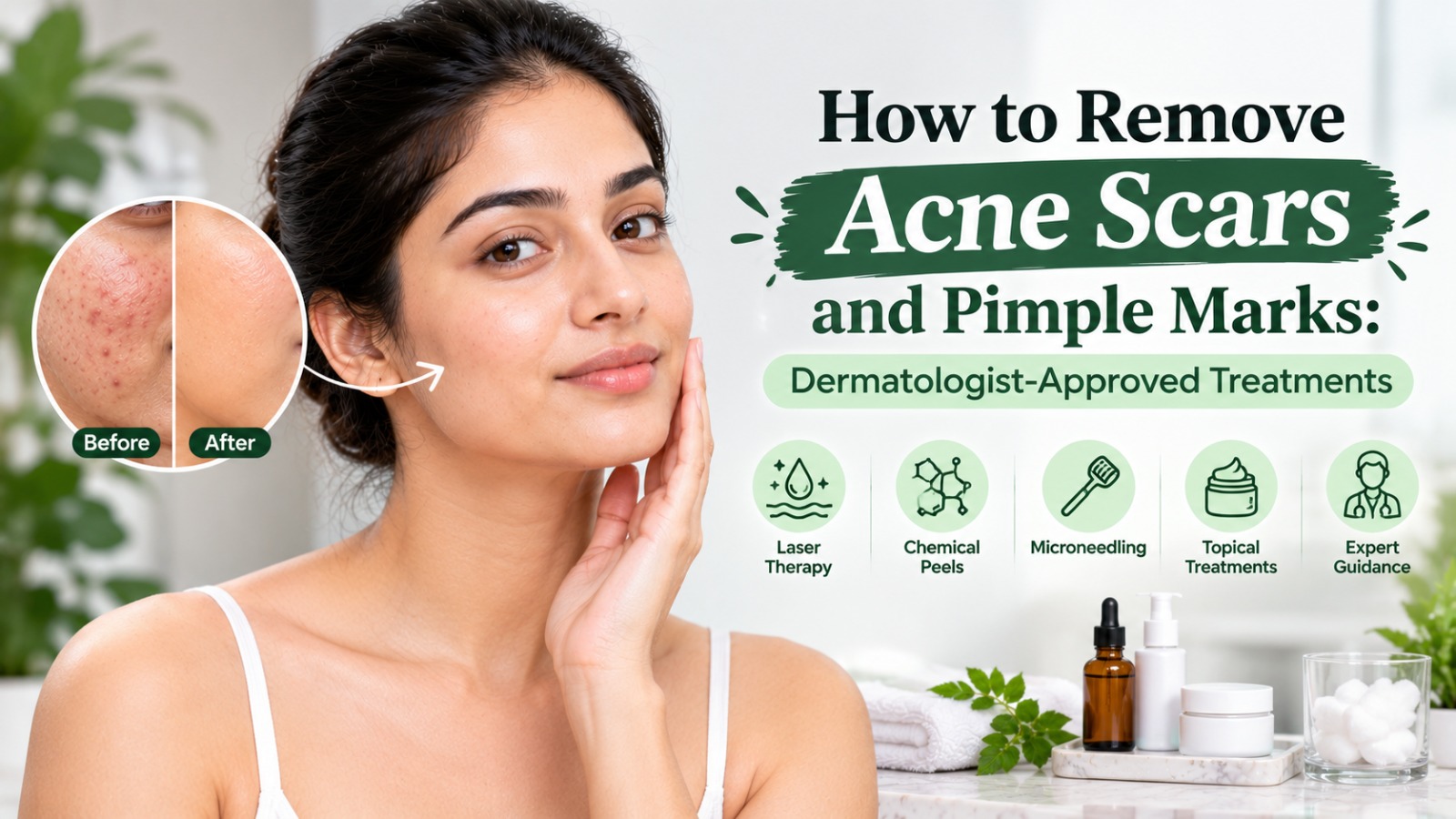
The pimple is finally gone. But it left something behind: a dark spot, a small dent, or a patch of uneven skin that makeup can't quite hide. For many people, this lasting reminder is more frustrating than the breakout itself. Here's the reassuring part. Most acne marks and scars can be improved, sometimes a lot, with the right approach. The key is knowing what you're dealing with, because a dark mark and a true scar need very different care. That's where a proper acne scar treatment in Delhi, guided by experienced doctors in Delhi, makes a real difference.
First, Is It a Mark or a Scar?
People use these words interchangeably, but they aren't the same thing.
A pimple mark is a flat spot of discolouration left after inflammation. On Indian skin, these are usually brown or dark patches. The medical name is post-inflammatory hyperpigmentation, or PIH. The skin surface is smooth. Only the colour has changed.
An acne scar is a change in the skin's texture. When deep inflammation damages collagen, the skin may heal with a dip or, less often, a raised bump.
|
|
Pimple Marks (PIH) |
Acne Scars |
|
What it looks like |
Flat brown, dark or reddish spot |
Dent, pit or raised bump |
|
Skin texture |
Smooth |
Uneven |
|
Fades on its own? |
Often, slowly over months |
Usually not |
|
Main treatment |
Sun protection, topical creams, sometimes peels |
Procedures that rebuild or reshape skin |
This difference matters. Many people who think they have scars actually have marks, which are usually easier to treat.
Types of Acne Scars
If the skin is indented, a dermatologist in Delhi will usually classify the scar into one of three main types. The first two have sharp edges, while the third looks softer and wavier.
- Ice pick scars: narrow, deep pits that look like small punctures
- Boxcar scars: round or oval dents with sharp edges, a bit like chickenpox marks
- Rolling scars: wide, wave-like dips that make the skin look uneven
Less commonly, acne leaves raised scars, called hypertrophic scars or keloids.
Most people have a mix of types, and that's why one single treatment rarely fixes everything.
Why Indian Skin Needs Extra Care
Darker skin tones are more likely to develop dark marks after acne, and those marks can last longer. The same tendency means aggressive procedures can sometimes cause new pigmentation if they're not chosen and done carefully.
This is why sunscreen isn't optional. Research shows that regular sunscreen use is one of the most effective ways to prevent new dark patches, especially in skin of colour. If you're treating marks without daily sun protection, you're working against yourself.
The Celebrity Skin Factor
Flawless skin on screen often comes from good lighting, makeup and editing as much as anything else. When public figures do talk about their skin, the routines that come up are usually consistent sunscreen, careful skincare and treatments planned by a dermatologist over time.
That's the more honest version of celebrity beauty secrets. A typical celebrity skincare treatment for marks or texture is rarely a single session. It's usually a planned series, alongside daily care at home.
Treating Dark Marks
For flat pigmentation, treatment is usually gentler than for scars. A skin specialist in Delhi may suggest:
- Broad-spectrum sunscreen, SPF 30 or higher, every day. This is the foundation of everything else.
- Topical creams with ingredients such as retinoids, azelaic acid, niacinamide or hydroxy acids, chosen based on your skin.
- Chemical peels for stubborn marks, selected and timed carefully on darker skin.
Most importantly, active acne needs to be controlled first. Otherwise new marks keep forming as old ones fade.
Dermatologist Treatments for Acne Scars
Indented scars need procedures that work deeper in the skin. Here's how common options are generally matched to scar type.
|
Treatment |
How It Works |
Often Used For |
|
TCA CROSS |
A strong acid applied precisely inside each pit to encourage collagen |
Ice pick scars |
|
Punch excision |
The scar is removed and the skin is stitched closed |
Deep ice pick or boxcar scars |
|
Subcision |
A fine needle releases bands pulling the skin down |
Rolling scars |
|
Microneedling (with or without radiofrequency) |
Tiny controlled injuries stimulate new collagen |
Rolling and shallow boxcar scars |
|
Fractional laser resurfacing |
Laser columns remodel the skin in sections |
Boxcar and mixed scars |
|
Dermal fillers |
Add volume under depressed scars |
Rolling scars, temporary improvement |
|
Chemical peels |
Resurface the top layers of skin |
Mild texture issues and marks |
A skin clinic in Delhi will often combine two or three of these over several months. For example, subcision might be followed by microneedling or laser sessions.
What Recovery and Results Look Like
Expectations matter a lot here. Scar treatment improves the appearance of scars. It rarely removes them completely.
|
Treatment Type |
Typical Downtime |
When Results Show |
|
Topical creams for marks |
None |
Gradually, over weeks to months |
|
Chemical peels |
A few days of peeling or redness |
After a series of sessions |
|
Microneedling |
Redness for a day or two |
Builds over several sessions |
|
Fractional laser |
Redness and swelling for several days |
Improves as collagen remodels over months |
|
Subcision and TCA CROSS |
Bruising or scabbing for about a week |
Gradual improvement over months |
The number of sessions and the exact recovery time depend on the treatment, your skin type and how deep the scars are. Your doctor should explain this before you start.
How a Treatment Plan Is Made
At Dadu Medical Centre, patients with acne scars or marks can consult Dr. Nivedita Dadu for an assessment. This usually involves checking whether the concern is pigmentation, scarring or both, identifying the scar types present, looking at skin tone and sensitivity, and making sure active acne is under control.
The plan is then built around your skin. Some people need only topical care and sun protection. Others benefit from a combination of procedures under a skin treatment in Delhi plan, which may include cosmetic treatment in Delhi or aesthetic treatment in Delhi options. Each comes with its own risks, recovery and costs, and these should be discussed openly before you start.
If your breakouts tend to appear along the hairline or forehead, it's worth checking scalp and hair products too. A hair clinic in Delhi can look at dandruff or product build-up, and the right hair treatment in Delhi may reduce new breakouts in that area.
Can You Prevent New Scars?
To a large extent, yes:
- Treat acne early, especially painful or deep pimples
- Don't pick, squeeze or pop spots
- Wear sunscreen daily
- Avoid harsh scrubs on inflamed skin
Deep, cystic acne is the most likely to scar. If you have it, getting treatment in Delhi early from a qualified clinic in Delhi is the best way to protect your skin.
Frequently Asked Questions
1. Do acne marks go away on their own?
Ans. Flat dark marks often fade over months, especially with sunscreen. True scars usually need treatment.
2. Can acne scars be removed completely?
Ans. Treatments can improve scars significantly, but complete removal is uncommon. Results vary by scar type.
3. Which treatment is best for ice pick scars?
Ans. Deep, narrow scars often respond to TCA CROSS or punch techniques. A dermatologist can advise you.
4. Is laser treatment safe for Indian skin?
Ans. It can be, with the right laser and settings. Darker skin has a higher risk of pigmentation, so assessment matters.
5. How many sessions will I need?
Ans. It depends on your scars and the treatment. Most scar treatments need several sessions over months.
6. Should I treat scars while I still have active acne?
Ans. Usually not. Active acne is controlled first, so new marks don't keep forming.
7. Does sunscreen help with acne marks?
Ans. Yes. Daily sunscreen helps prevent marks from darkening and supports other treatments.