
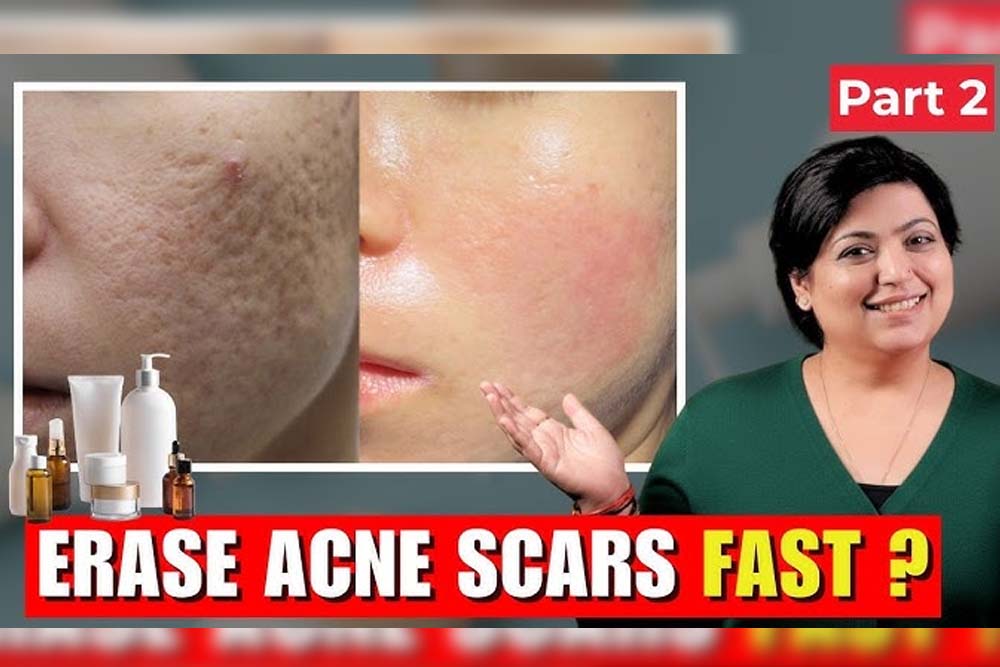
Acne and the marks it leaves behind are genuinely one of the most common concerns people bring to a dermatologist. Red marks, brown marks, open pores, blackheads, whiteheads, and every kind of scar imaginable often after trying product after product with nothing working. If any of this sounds familiar and you're looking into proper Acne Scars treatment in Delhi for acne marks or scarring, this breakdown should help you understand exactly what you're dealing with and what actually addresses it.
Why Do Pimples Leave Marks That Just Won't Fade?
There are a few common reasons marks linger far longer than the pimple itself. Not taking antibiotics at the right time when needed is one. Having nodulocystic acne the deep, lump-like kind is another, since this type is far more prone to leaving marks behind by nature. Popping pimples is a big one too, since it directly damages the skin and often causes lasting red or brown marks. Complexion also plays a role in how visible these marks end up being, and some people are simply more prone to marking even without touching their acne at all.
Tackling Red Marks First
For red marks specifically, azelaic acid is genuinely one of the most reliable molecules available, typically found in strengths of 10%, 15%, and 20%. Newer formulations increasingly pair azelaic acid with Centella Asiatica, which helps reduce redness further while also minimising the risk of scarring. Some formulations now combine azelaic acid with niacinamide too, which helps unclog pores, supports barrier repair, closes up open pores, and calms overall skin sensitivity.
Moving to Brown Marks
Brown marks need a slightly different approach. You want a formulation that supports barrier repair without drying out the skin further, avoids ingredients that could irritate skin into producing more pigmentation, and actually works to lighten existing brown marks over time. Newer formulations in this space tend to outperform older, more established lightening creams, particularly for people who've already tried the basics without much change.
|
Mark Type |
What Helps |
Key Ingredient |
|
Red marks |
Reduces redness, prevents scarring |
Azelaic acid (10–20%), Centella Asiatica |
|
Brown marks |
Repairs barrier, lightens pigmentation |
Newer lightening formulations |
|
Persistent brown marks |
Faster clearance |
Power/Bio exosome peels |
If brown marks are particularly stubborn and creams haven't moved the needle fast enough, peels like power exosome or bio exosome peels are worth considering. Where creams might take around six months to visibly lighten brown marks, these peels can deliver similar results in just four to six weeks.
Now, About Actual Scars
This is where things get more specific, because not all acne scars are the same, and treating the wrong type with the wrong approach rarely helps.
Scarring typically happens when acne isn't treated at the right time, when nodulocystic acne is involved, when pimples get popped, or with hormonal acne that takes longer to heal. The longer bacteria sits inside an inflamed pimple, the more skin damage accumulates before it finally clears which is exactly why untreated or mishandled acne tends to leave deeper marks behind.
Depressed (Atrophic) Scars
These come in three distinct types. Ice pick scars are narrow, pointed, and V-shaped. Box scars have a wider base compared to ice pick scars. Rolling scars create an uneven, wavy texture across the skin's surface. All three fall under the atrophic scar category, and starting scar-prevention creams the moment a pimple appears can significantly reduce the chances of any of these forming in the first place.
For active prevention or early-stage healing, creams containing Allantoin, Centella Asiatica, or silicone-based ingredients work well, since they support barrier healing and encourage collagen remodelling. If skin isn't too irritation-prone, retinoid-based creams can be added too. Centella Asiatica, in particular, has become a personal favourite recommendation. It's a fairly newer molecule that's become widely used, and starting it early has shown a real reduction in scarring risk.
|
Atrophic Scar Type |
Shape |
Best Early Treatment |
|
Ice pick scars |
Narrow, V-shaped, pointed |
Creams early; TCA CROSS for established scars |
|
Box scars |
Wide base |
Laser resurfacing (CO2, MNRF) |
|
Rolling scars |
Wavy, uneven texture |
Laser resurfacing (CO2, MNRF) |
When Creams Aren't Enough
If creams have already done what they can and scarring is still visible, laser-based options come into play. For ice pick scars specifically, no cream will fully resolve them TCA CROSS is the technique that actually works here. TCA gets applied in a highly localised way directly onto the scar, triggering focused healing and collagen remodelling exactly where it's needed, which makes those sharp V-shaped scars noticeably shallower and less visible.
For box scars and rolling scars, several laser technologies work well. If scars aren't too deep and skin is still in its healing phase, derma pen treatments are a reasonable starting point. Derma rollers, on the other hand, tend to be too mild by comparison now that more advanced options exist, so they're not something worth spending time on anymore. For deeper concerns, CO2 fractional laser or microneedling radiofrequency (MNRF) are considerably more effective. CO2 is more aggressive, with three to four days of downtime, while MNRF is gentler, using insulated needles to minimise surface damage so skin heals within a day. Both work on the same underlying principle: creating a controlled injury that pushes skin into a healing and collagen-remodelling phase, similar to how skin naturally heals after any injury.
|
Treatment |
Aggressiveness |
Downtime |
|
Derma pen |
Mild |
Minimal |
|
MNRF (Microneedling RF) |
Moderate |
About a day |
|
CO2 Fractional Laser |
More aggressive |
3–4 days |
Combination Treatments Worth Knowing About
For scars pulled downward by fibrous bands beneath the skin, subcision is often paired with lasers. This procedure breaks those fibrous bands, allowing the scar to lift naturally on its own. Alongside subcision, treatments like GFC or exosomes are commonly added too. GFC is essentially a more refined version of PRP, where growth factors are extracted from platelets and infused directly alongside laser sessions. Exosomes carry strong wound-healing properties as well, making them a solid alternative to GFC. Many patients combine subcision, GFC, and exosomes together with their laser sessions for faster, more noticeable results.
Raised (Hypertrophic) Scars
These are a different category altogether raised rather than depressed, often called papular scars, and more commonly seen around the nose and chin area. Unlike the pitted, depressed scars typical of the cheeks, hypertrophic scars sit above the skin's surface. If treated early with the right creams, these often don't form at all. But once they've already developed, the approach shifts to laser treatment combined with intralesional steroid injections, administered directly into the raised scar to help flatten it and reduce visibility over time. Makeup rarely hides raised scars effectively, which makes proper treatment the more reliable path toward smoother-looking skin.
Getting the Right Diagnosis
This is exactly the kind of nuanced assessment that comes up constantly during consultations at Dadu Medical Centre. Dr. Nivedita Dadu often emphasises that identifying the exact scar type atrophic versus hypertrophic, ice pick versus rolling versus box — is what determines which treatment will actually work, since using the wrong approach on the wrong scar type wastes both time and money. If you've tried multiple creams without seeing real change, or you're unsure what type of scarring you're dealing with, consulting a dermatologist in Delhi is the most reliable way to get an accurate diagnosis rather than guessing your way through more products.
For anyone researching a proper skin clinic in Delhi that offers the full range of these treatments from TCA CROSS to MNRF, subcision, GFC, and exosome combinations, getting a professional assessment first makes every subsequent decision far more targeted. A reliable clinic in Delhi will evaluate your scar type, skin healing pattern, and history of acne before recommending a specific treatment path rather than a one-size-fits-all cream regimen.
Final Thoughts
Acne marks and scars aren't a single problem with a single fix red marks, brown marks, atrophic scars, and hypertrophic scars all need genuinely different approaches. Starting the right creams early can prevent a lot of scarring altogether, but for scars that have already formed, in-clinic treatments like TCA CROSS, laser resurfacing, subcision, and growth factor therapies offer results that topical products simply can't match on their own. Getting an accurate diagnosis first is really the foundation everything else builds on.
Frequently Asked Questions
1. What's the difference between red marks and acne scars?
Ans. Red or brown marks are temporary pigmentation left after a pimple heals, while scars involve actual changes to skin texture. Marks usually fade faster than true scars with the right treatment.
2. Can azelaic acid help with both red and brown marks?
Ans. It's primarily effective for red marks and reducing inflammation-related redness. Brown marks generally respond better to dedicated pigmentation-lightening formulations.
3. Do ice pick scars respond to creams?
Ans. No, ice pick scars typically don't improve with creams alone. TCA CROSS is the treatment specifically effective for this scar type.
4. What's the difference between CO2 laser and MNRF for scars?
Ans. CO2 laser is more aggressive with 3-4 days of downtime, while MNRF is gentler with about a day of recovery. Both work by stimulating collagen remodelling.
5. Is derma rolling still recommended for acne scars?
Ans. Not particularly, since more advanced options like derma pen and MNRF now offer better results. Derma rolling is considered too mild by comparison.
6. What causes raised, hypertrophic acne scars?
Ans. These often develop from acne around the nose and chin that wasn't treated early. They respond to laser treatment combined with steroid injections rather than creams alone.
7. How do I know which scar treatment is right for me?
Ans. This depends on your specific scar type atrophic or hypertrophic, and which subtype. A dermatologist in Delhi can diagnose your scar type and recommend the right treatment plan.