
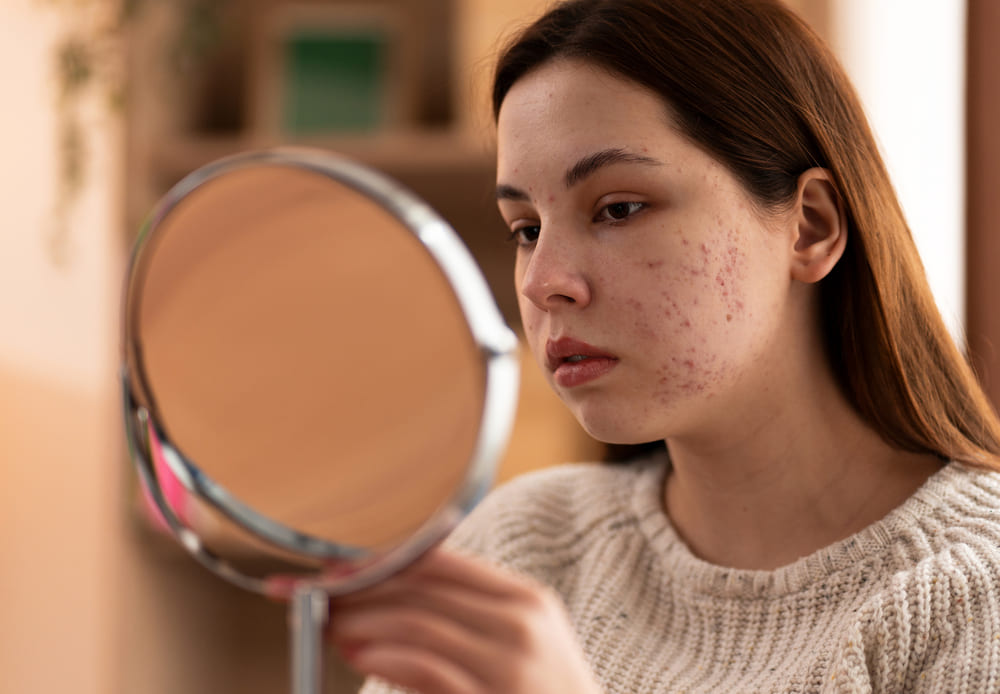
There is a particular kind of frustration that comes with acne that just will not respond to anything. You try every face wash, every spot treatment, every suggestion from well-meaning friends, and the breakouts keep coming back, usually around the same time each month, in the same places, with the same stubborn persistence. If this sounds familiar and you also have irregular periods, unexpected weight gain, or excess facial hair, there is a very real chance that PCOS is behind your skin problems.
PCOS, which stands for polycystic ovary syndrome, is a hormonal condition that affects a significant number of women and one of its most visible and distressing symptoms is chronic acne. Understanding why PCOS causes acne makes it a lot easier to understand why treating it requires more than just a topical cream.
The connection comes down to hormones, specifically androgens. Women with PCOS tend to have elevated levels of androgens, which are male hormones that are present in women too but in smaller amounts under normal circumstances. When androgen levels rise, they trigger the sebaceous glands in the skin to produce more oil. This excess oil mixes with dead skin cells inside the pores and creates the perfect environment for acne-causing bacteria to thrive. The result is persistent, often painful breakouts that tend to cluster around the jawline, chin, and lower cheeks, which is the classic hormonal acne pattern.
What makes PCOS acne particularly difficult is that it does not just sit on the surface. Because the root cause is internal and hormonal, purely topical treatments rarely give lasting results on their own. You might see some improvement with a good face wash or a prescription cream but the breakouts keep returning because the hormonal imbalance driving them has not been addressed. This is one of the most common reasons women with PCOS spend years cycling through skincare products without ever finding something that truly works long term.
Effective treatment for PCOS-related acne needs to work on two levels at the same time. The skin itself needs to be managed with appropriate topical treatments or in-clinic procedures like chemical peels or laser therapy that reduce active breakouts and address the post-acne marks and scarring that tend to accumulate over years of chronic breakouts. At the same time the hormonal imbalance needs to be brought under control through medication, dietary changes, and lifestyle adjustments that reduce androgen activity and improve insulin sensitivity, which is closely tied to androgen levels in PCOS.
Insulin resistance is something a lot of women with PCOS do not realise they have, and it plays a direct role in worsening both the hormonal imbalance and the acne that comes with it. Managing blood sugar through diet, cutting down on refined carbohydrates, and in some cases taking medication to improve insulin response can have a surprisingly positive effect on skin clarity over time.
Getting proper acne treatment in Delhi for PCOS means finding doctors who look at the full picture rather than just prescribing something for the breakouts. Experienced doctors in Delhi who understand the hormonal side of acne will run blood work, check androgen and insulin levels, and build a treatment plan that addresses both your skin and the underlying condition driving it. A good skin clinic in Delhi will coordinate the dermatological and hormonal aspects of care so that both are being treated together rather than separately.
Dadu Medical Centre offers comprehensive consultations for women dealing with PCOS-related acne, combining expert dermatological treatment with hormonal assessment to create personalized plans that address the real cause and deliver lasting skin improvement.
FAQs
1. How do I know if my acne is caused by PCOS rather than regular hormonal breakouts?
Ans. PCOS acne is usually persistent, clusters around the jawline and chin, and comes alongside other symptoms like irregular periods or excess hair growth.
2. Can treating PCOS alone clear up acne without using any skin products?
Ans. Managing PCOS helps significantly but most women need a combination of hormonal treatment and proper skincare to fully control their acne.
3. What kind of acne treatment in Delhi works best for PCOS-related breakouts?
Ans. A combined approach using prescription topicals, in-clinic treatments like peels or laser, and hormonal management together gives the most lasting results.
4. Does diet really affect PCOS acne or is it all about medication?
Ans. Diet plays a real role because reducing refined carbohydrates and managing blood sugar helps lower androgen levels which directly reduces breakouts.
5. Can doctors in Delhi prescribe medication specifically for hormonal acne caused by PCOS?
Ans. Yes, dermatologists and gynaecologists work together to prescribe treatments that target androgen activity and reduce the hormonal trigger for acne.
6. How long does it take to see improvement in PCOS acne with proper treatment?
Ans. Most women begin to see meaningful improvement within two to three months of starting a properly structured hormonal and skincare treatment plan.
7. Are chemical peels or laser treatments safe for PCOS acne at a clinic in Delhi?
Ans. Yes, these in-clinic treatments are safe and effective for managing active breakouts and clearing post-acne marks when done by qualified dermatologists.
8. Will PCOS acne come back after treatment if the condition is not fully cured?
Ans. PCOS is a manageable condition and with consistent treatment and lifestyle management most women maintain significantly clearer skin long term.