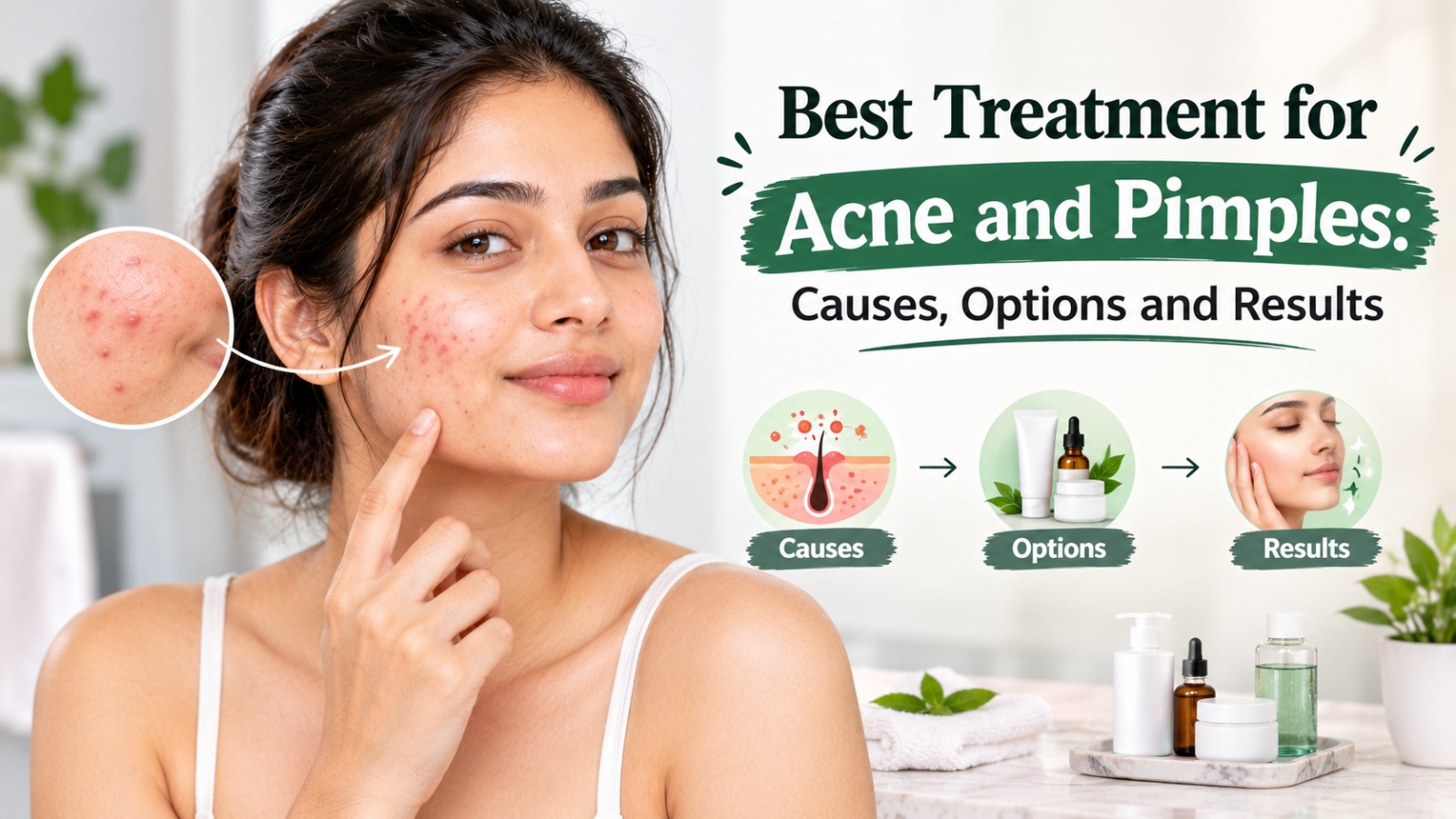
Few things can ruin a morning like spotting a new pimple right before an important meeting. For some people, it's an occasional breakout. For others, it's a cycle that never seems to end, with new spots appearing before the old marks have faded. If that sounds like you, the good news is that acne responds well to the right treatment. The hard part is knowing which one suits your skin. Getting a proper acne treatment in Delhi from experienced doctors in Delhi starts with understanding why your skin is breaking out in the first place.
Why Do Pimples Keep Coming Back?
Acne begins inside the pore. A few things usually happen together. The skin makes more oil than it needs, dead skin cells don't shed properly and clog the pore, bacteria that normally live on the skin multiply in that blocked space, and the area becomes inflamed. That's when a small blocked pore turns into a red, painful pimple.
Several factors can push this process along:
- Hormonal changes during the teenage years, before periods, or with conditions like PCOS
- Heavy, pore-clogging makeup or skincare products
- Hair oils and styling products that touch the forehead
- Stress and poor sleep
- Some medicines
- Picking or squeezing pimples, which spreads inflammation
Acne is also extremely common. Most teenagers get it at some point, and plenty of adults keep breaking out well into their 30s and 40s, especially women with hormonal acne.
Not All Acne Looks the Same
Knowing your acne type matters, because the treatment depends on it.
|
Type |
What It Looks Like |
How Serious |
|
Blackheads |
Small dark dots, often on the nose and chin |
Mild |
|
Whiteheads |
Tiny closed bumps with a white top |
Mild |
|
Papules |
Small red, tender bumps without pus |
Mild to moderate |
|
Pustules |
Red bumps with a yellow or white centre |
Mild to moderate |
|
Nodules |
Large, hard, painful lumps under the skin |
Severe |
|
Cysts |
Deep, pus-filled, painful lumps that can scar |
Severe |
Nodules and cysts are the ones that most often leave scars. If you have these, it's worth seeing a dermatologist in Delhi early rather than trying home remedies for months.
What Celebrity Skin Teaches Us About Acne
Glowing celebrity skin on screen can make acne feel like a personal failure. It isn't. Long shooting hours, layers of makeup, hot lights and constant travel are a recipe for breakouts, and many public figures have spoken about dealing with acne themselves.
What usually helps them isn't a secret product. It's consistent care, gentle cleansing, removing makeup properly and regular guidance from a skin specialist. That's one of the more realistic celebrity beauty secrets, and a good celebrity skincare treatment plan is often built on the same medical basics available to anyone.
Treatment Options That Actually Have Evidence
In 2024, the American Academy of Dermatology updated its acne guidelines after reviewing the research. Here's a simplified look at the main options a skin clinic in Delhi may discuss.
|
Treatment |
How It Helps |
Usually Used For |
|
Benzoyl peroxide |
Reduces acne-causing bacteria |
Red, inflamed pimples |
|
Topical retinoids (like adapalene) |
Unclog pores and help prevent new ones from forming |
Blackheads, whiteheads and most types of acne |
|
Topical antibiotics |
Reduce bacteria and inflammation |
Inflamed acne, always combined with other treatments |
|
Oral antibiotics |
Calm moderate to severe inflammation from inside |
Moderate to severe acne, for a limited time |
|
Hormonal treatment |
Targets hormone-driven breakouts |
Adult women with jawline or period-related acne |
|
Oral isotretinoin |
Shrinks oil glands and reduces severe acne |
Severe acne, scarring acne, or acne that hasn't responded to other treatments |
|
Steroid injections |
Quickly reduce a large, painful bump |
Individual large nodules or cysts |
A few things are important here. Antibiotics shouldn't be used alone, because bacteria can become resistant to them. Isotretinoin is very effective but needs close medical monitoring and isn't safe during pregnancy. Hormonal treatments are prescribed only after a proper evaluation. None of these should be started without a doctor's advice.
Where Do Peels and Lasers Fit In?
Many people ask about chemical peels, laser sessions and other aesthetic treatment in Delhi for acne. These procedures are widely used, but the AAD's review found the current research wasn't strong enough to make formal recommendations for them in treating active acne.
That doesn't mean they're useless. Your doctor may suggest them alongside medicines in selected cases, or later for acne marks and scars once active breakouts are under control. Just think of them as add-ons, not replacements for proper medical treatment. Skin treatment in Delhi for scars, including some cosmetic treatment in Delhi options, is usually planned only after the acne itself has settled.
How a Doctor Plans Your Treatment
At Dadu Medical Centre, patients with acne can consult Dr. Nivedita Dadu for a full skin assessment. This usually means looking at the type and severity of acne, where it appears, how long it has been going on, what products you use, and whether there are signs of a hormonal cause. For example, women with jawline acne and irregular periods may be advised hormonal tests.
From there, the treatment is planned around your skin rather than a fixed package. That might be a simple topical routine for mild acne, or a combination approach for more stubborn breakouts.
What Results Should You Expect?
This is where many people give up too soon. Acne treatment takes time.
|
Stage |
What Usually Happens |
|
First 2 to 4 weeks |
Skin may feel dry or slightly irritated. Some people see a brief flare-up when starting retinoids |
|
6 to 8 weeks |
Most treatments start to show visible improvement |
|
3 months |
Clearer improvement in breakouts for many patients |
|
Ongoing |
Maintenance treatment helps prevent new breakouts |
Doctors generally recommend giving a treatment around six to eight weeks before deciding whether it works. Switching products every week only irritates the skin and makes it harder to judge what's helping.
A Few Habits That Support Treatment
- Wash your face twice a day with a gentle cleanser
- Use oil-free, non-comedogenic moisturisers and sunscreen
- Don't pick or squeeze pimples
- Keep hair oils and styling products away from your face
- Change pillowcases regularly
If your acne seems linked to your hairline or scalp, a hair clinic in Delhi can check for dandruff or product build-up, and the right hair treatment in Delhi may help reduce forehead breakouts.
When Should You See a Doctor?
Book a consultation at a clinic in Delhi if you have painful lumps or cysts, acne that leaves marks or pits, breakouts that haven't improved after two to three months of over-the-counter care, or acne that's affecting your confidence. Early treatment in Delhi under a qualified dermatologist can help prevent scarring, which is much harder to fix later.
Frequently Asked Questions
1. What is the best treatment for acne?
Ans. There's no single best option. The right treatment depends on your acne type, severity and cause.
2. How long does acne treatment take to work?
Ans. Most treatments take around six to eight weeks to show visible improvement.
3. Can acne come back after treatment?
Ans. Yes, it can. Maintenance treatment and a good skincare routine help keep breakouts under control.
4. Are chemical peels good for acne?
Ans. They may help as an add-on in some cases. The evidence for treating active acne is still limited.
5. Is isotretinoin safe?
Ans. It works well for severe acne but needs close medical supervision and isn't safe in pregnancy.
6. Can hormones cause adult acne?
Ans. Yes. Hormonal acne often appears on the jawline and chin, especially in adult women.
7. Should I pop my pimples?
Ans. No. Squeezing can push infection deeper and increase the risk of marks and scars.